
Loading...
Serving St. Petersburg, FL and surrounding areas. (727) 632-8174
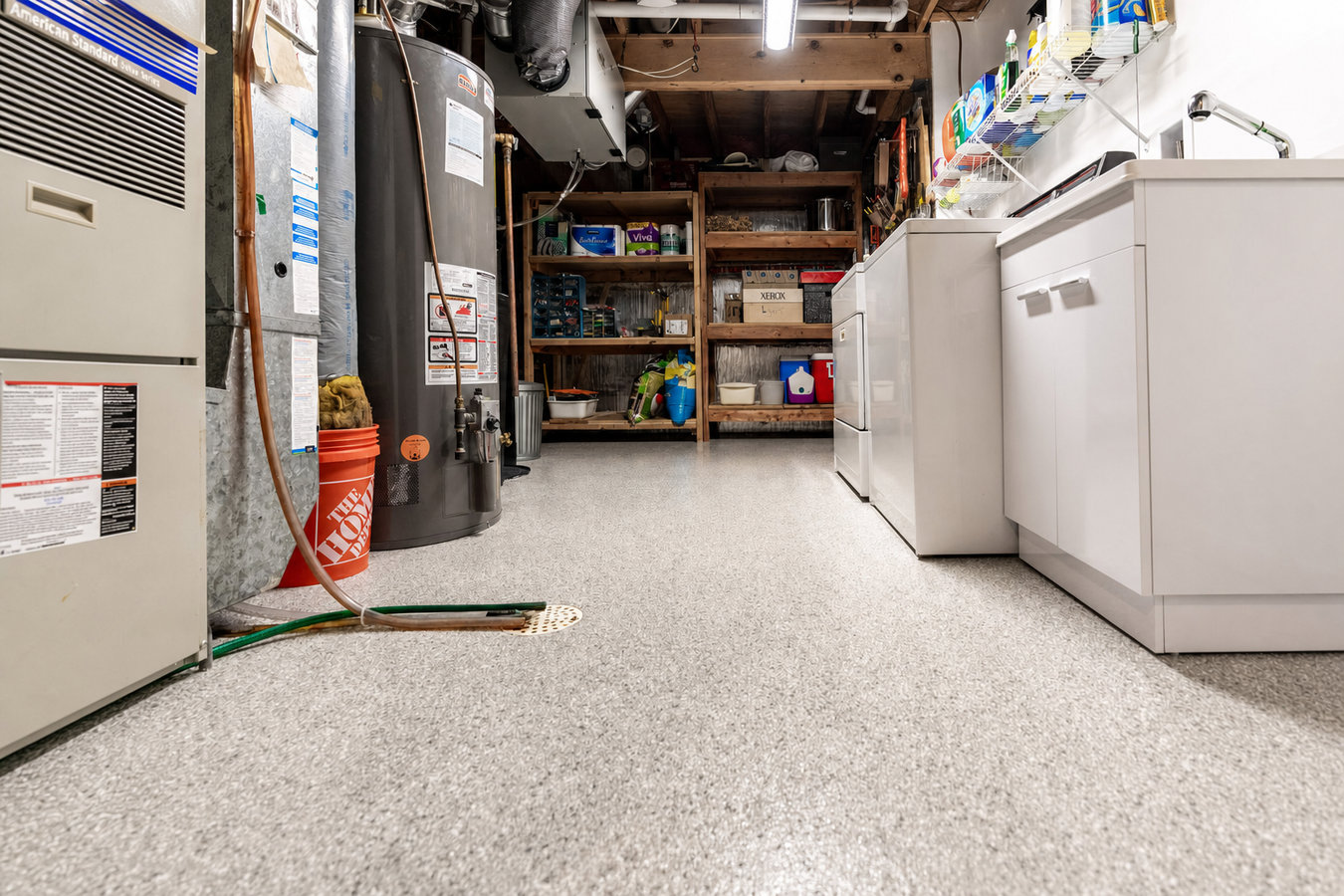
St. Pete slabs sit on a high water table. We test before we coat, and we use products rated for Florida's humidity so the floor actually lasts.
St. Pete slabs sit on a high water table. We test before we coat, and we use products rated for Florida's humidity so the floor actually lasts.
Basement flooring in St. Petersburg refers to ground-level concrete slab spaces - garages, utility rooms, sunken living areas, and converted lower-level areas - where moisture coming up from below is the primary challenge, and most jobs run two to four days from surface prep through final coat.
Most homes in St. Petersburg are built on slab foundations with no true basement below, because the water table in Pinellas County sits very close to the surface. That same water table is what makes flooring these spaces tricky. The moisture is always there, below the slab, and any coating applied without proper testing and preparation will eventually fail - often within a single rainy season. The fix is not a different coating; it is doing the prep work correctly from the start.
Once the slab is properly prepared and sealed, these spaces become genuinely useful rooms rather than damp, dusty storage areas. For bare slabs that need significant leveling or old-coating removal before any new finish, we handle that groundwork through our dedicated concrete grinding and surface preparation service.
Five signs St. Petersburg homeowners commonly notice before calling us.
If you notice wet-looking spots or a cool, damp feeling underfoot after a heavy St. Petersburg rainstorm, moisture is likely pushing up through your slab from below. This is one of the clearest signs that your floor needs moisture-blocking treatment before any new surface goes on. Left alone, that moisture will eventually cause mold, odors, and damage to anything stored on the floor.
If your garage floor or utility room has a painted or coated surface lifting away in sheets or bubbles, the original coating has lost its bond - often because moisture was not properly addressed before it was applied. A fresh coating applied over peeling paint will fail just as quickly unless the surface is fully stripped and prepared first.
That powdery white substance is efflorescence - it forms when water moves through concrete and deposits minerals on the surface as it evaporates. In St. Petersburg's high-humidity environment, efflorescence is a common sign that moisture is actively moving through your slab. Any coating applied without treating this first will eventually fail.
Small hairline cracks are common in older St. Petersburg slab homes and do not necessarily mean structural trouble, but they do create entry points for moisture and make the floor harder to maintain. If you are noticing chips near doorways or cracks that seem to be widening over time, a professional assessment and resurfacing can restore a smooth, safe surface before the damage gets worse.
Every project starts with moisture testing, not with coating. That order matters enormously in Pinellas County, where the water table beneath most slabs means moisture is nearly always present. We test the slab, determine whether a moisture barrier is needed, and only then choose the finish system that will actually bond and last. The most popular options are epoxy and polyurea coatings - both handle moisture better than wood, laminate, or carpet, and both are easy to clean in a city where humidity and tracked-in sand are facts of life. For slabs that need significant grinding, old-coating removal, or crack repair before a new surface can go on, we coordinate the foundation work through our concrete grinding and surface preparation service before any finish is applied.
For homeowners who want a lower-maintenance, longer-lasting alternative to coatings, polished concrete is also a strong option for slab spaces. The slab itself is ground down and densified - no coating on top - which eliminates the risk of a peeling topcoat over time. For spaces that already have a solid floor but need the surface protected rather than fully refinished, our concrete sealing service is often the right fit. We walk you through which option makes sense for your specific slab condition and how you use the space before you commit to anything.
Best for garages, utility rooms, and converted spaces where a durable, easy-to-clean surface is the priority and decorative options are a bonus.
Best for homeowners who need a faster turnaround - these systems cure quickly and resist the temperature swings St. Petersburg concrete sees year-round.
Best for homeowners who want a low-maintenance surface with no topcoat to peel over time, and who are open to a natural, matte-to-satin look.
Best for slabs in good structural condition that need moisture protection and surface hardening without a full coating system.
Pinellas County sits on a peninsula where the water table is often just a few feet below the surface, especially in low-lying neighborhoods like Shore Acres, Riviera Bay, and areas near Weedon Island. That underground moisture is constantly working against any unprotected slab, and it does not take a flood or a burst pipe to cause problems - the pressure is there year-round, rising and falling with rainfall and seasonal water table changes. A flooring system installed without a proper moisture barrier in these neighborhoods is likely to fail within a single rainy season. Knowing this going in - and choosing products that account for it - is the single biggest difference between a floor that lasts and one that does not. St. Petersburg also receives roughly 50 inches of rain per year, concentrated between June and September, which is why experienced local contractors prefer to schedule slab coating work between October and May when ambient conditions support proper curing.
Salt air is an additional factor for homes within a mile or two of Tampa Bay or the Gulf of Mexico. Salt particles can weaken the bond of coatings that were not formulated for coastal conditions, particularly at edges and transitions where moisture tends to concentrate first. We work throughout the area - including Seminole and Pinellas Park - and we specify products and application methods suited to each area's specific exposure.
A clear, predictable process - here is what to expect from your first call to a finished floor.
Reach out by phone or through our contact form. We reply within one business day to schedule a free in-person visit. There is no obligation to book, and we will not pressure you for a decision on the spot.
We visit your space, test the concrete for moisture, and assess the slab condition. The results determine which products are safe to use and whether any prep work is needed before the finish goes on. You get a written estimate that itemizes prep and coating separately - so you know exactly what you are paying for.
The crew grinds the slab, repairs cracks, and removes old coatings before any new product is applied. This prep phase is typically the longest part of the job. The finish is then applied in layers - primer, color or decorative coat, and a clear protective topcoat - with cure time between each layer. The space will be off-limits and ventilated during this phase.
Most coatings are safe for light foot traffic within 24 hours of the final coat, with full hardness reached in 72 hours. We do a walkthrough with you once the floor is ready, point out anything you should know, and give you specific care instructions - including what cleaners are safe to use and when, if ever, to reseal.
We test the slab before recommending anything - and we give you a written estimate that separates prep costs from coating costs, so there are no surprises.
(727) 632-8174In Pinellas County, skipping a moisture test before coating a slab is one of the most reliable ways to end up with a peeling floor within a year. We test every slab before recommending a product, and if the moisture level requires a barrier coat first, we tell you that upfront - not after the job is done and the finish starts failing.
St. Petersburg's rainy season runs June through September, and high ambient humidity during those months can interfere with how coatings cure. We are honest about timing - if your project can wait for drier conditions, we will say so. That kind of straightforward advice protects your investment and keeps you from paying for a redo.
Homes near Tampa Bay and the Gulf face salt air that accelerates wear on coatings not rated for that environment. We specify products suited to St. Petersburg's coastal exposure - paying extra attention to edges and transitions where moisture and salt tend to concentrate first. That detail matters in this market in a way it simply does not in inland cities.
Florida requires contractors performing work above a certain dollar threshold to be licensed through the state. You can verify any contractor's license status on the Florida DBPR license lookup before work begins. We carry liability insurance and workers' compensation coverage - ask for proof and we will provide it.
Taken together, these points mean you get a contractor who tests before coating, is honest about timing, and builds for the specific conditions of this market - not a generic approach applied to a Florida slab. Call us or use the form below to get started.
The foundational step before any new finish goes on - old coatings removed, cracks addressed, and the slab opened up for proper bonding.
Learn MoreStandalone sealing for slabs that are structurally sound and need moisture protection without a full coating system.
Learn MoreFall and winter are the best time for this work in Florida - schedule your free estimate now before the season fills up.