
Loading...
Serving St. Petersburg, FL and surrounding areas. (727) 632-8174
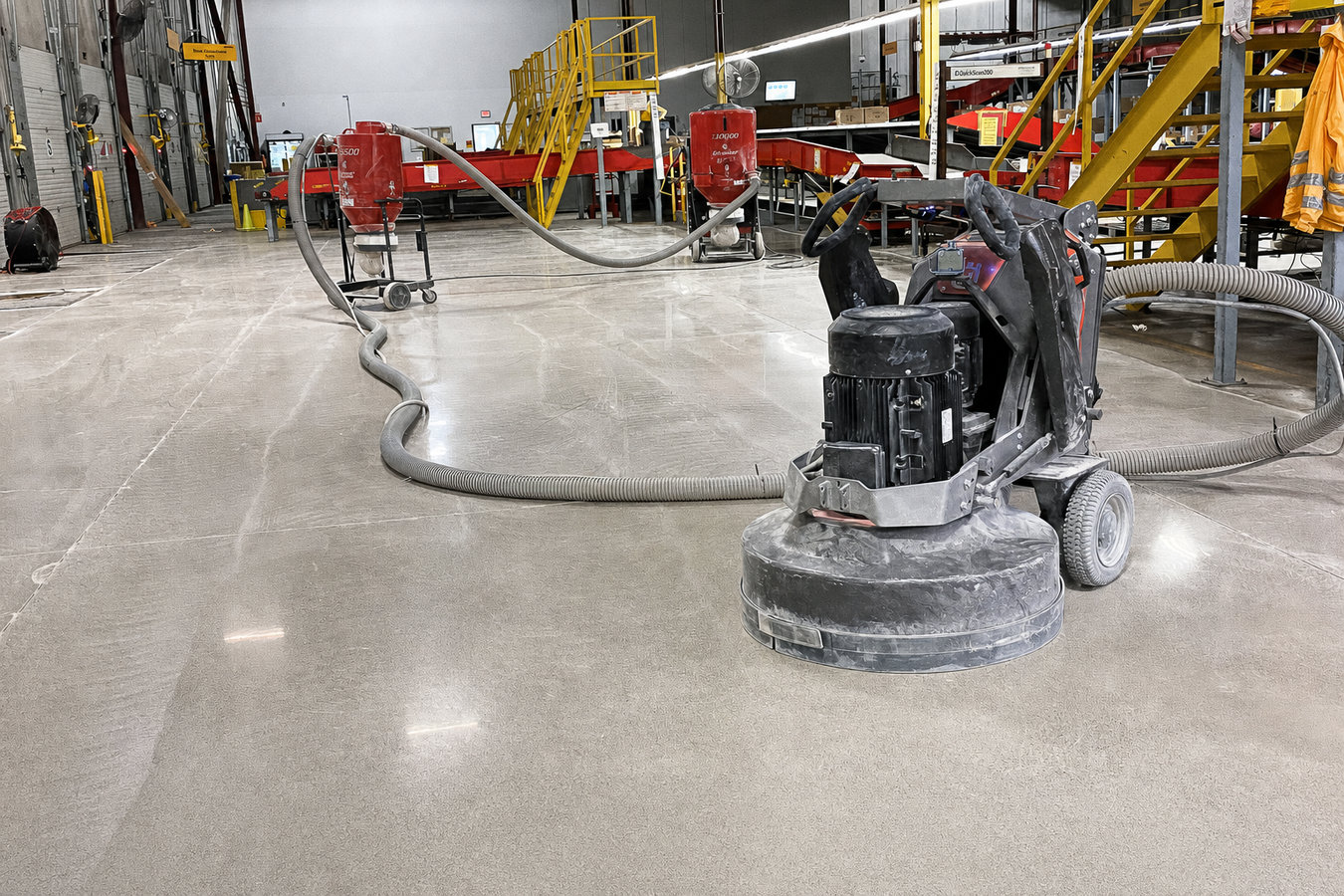
Peeling coatings and slippery slabs start with bad prep. We fix the foundation first so whatever goes on top actually lasts.
Peeling coatings and slippery slabs start with bad prep. We fix the foundation first so whatever goes on top actually lasts.
Concrete grinding and surface preparation in St. Petersburg uses heavy rotating diamond discs to shave down the top layer of a slab, removing old coatings, leveling uneven spots, and roughening the surface so a new finish can bond deeply - most residential jobs take one full day.
If your garage floor epoxy is bubbling, your patio coating is peeling, or you want to add a new sealer or overlay, grinding is not optional - it is the step that determines whether the new material holds for years or fails within one rainy season. This is especially true in St. Petersburg, where ground moisture and summer humidity put constant pressure on any coating applied to an improperly prepped slab. Once the surface is properly opened and clean, your options include concrete sealing to protect the bare slab from weather and staining.
For floors that have old adhesive, thick failed coatings, or surface debris that needs to come off before grinding can begin, our concrete floor stripping and removal service handles that first step cleanly so nothing interferes with the prep work.
Four signs St. Petersburg homeowners commonly spot on their own.
If patches of epoxy or paint are lifting away from your garage floor or patio, the original surface was not properly prepared when the coating went down - or moisture is pushing up from below. In St. Petersburg's humid climate this is extremely common, especially in homes built before the 1990s. Grinding removes the failed coating and gives the slab a genuine fresh start.
If water sits in puddles on your driveway, patio, or garage floor after a storm rather than draining away, the slab has likely settled unevenly over time. St. Petersburg's sandy coastal soil shifts gradually, and even a small dip causes drainage problems that lead to staining, algae growth, and surface damage. Grinding can level minor low spots and restore proper drainage.
Smooth, worn concrete becomes dangerously slick when wet - a real concern in a city where afternoon rain is a near-daily event for half the year. If you find yourself stepping carefully on your patio or pool deck after a shower, the surface has lost the texture it needs to be safe. Grinding restores a slip-resistant profile without changing the overall look of the concrete.
A chalky white residue - especially near the edges of a slab or around cracks - is often a sign that moisture is moving through the concrete and leaving mineral deposits behind. This is common in older St. Petersburg homes where slabs were poured on sandy soil without a moisture barrier. Grinding removes the damaged surface layer and gives you a clear picture of what you are working with before any repairs or coatings go down.
Every grinding job starts with a thorough assessment of the slab - its condition, what is currently on it, and what you want to apply afterward. From there, we use industrial diamond grinding machines with built-in dust collection to remove old coatings, level uneven spots, open the concrete pores, and produce a surface profile ready to receive a new finish. We include crack patching as part of the prep work so the surface is even before anything new goes down. Once the slab is properly prepped, it is ready for concrete sealing to lock in protection against moisture and staining.
For projects where heavy adhesive, thick old coatings, or debris need to come off before grinding begins, we coordinate concrete floor stripping and removal as a first step. Handling both phases under one contractor keeps the timeline clean and ensures the grinding work starts on a surface that is genuinely ready - not just visually cleaner. We also perform moisture testing before any coating is recommended, because in St. Petersburg's climate, skipping that step is one of the most common reasons a freshly coated floor fails within its first year.
Best for garage floors and patios where existing epoxy, paint, or sealer has failed and needs to come off before a new coating can bond properly.
Best for slabs with minor unevenness, settled low spots, or a too-smooth surface that needs texture for a new overlay or coating to grip.
Best for slabs with hairline or moderate surface cracks that need to be filled level before any finish material is applied.
For floors with heavy adhesive, thick old coatings, or debris that must be stripped away before grinding can begin.
St. Petersburg sits on a peninsula surrounded by Tampa Bay and the Gulf of Mexico, which means the air and the ground hold moisture almost constantly. Concrete slabs here absorb that moisture from below, and if a contractor does not test for it before grinding and coating, the new surface can blister or peel within months. The city also gets some of the most reliable afternoon thunderstorms in the country from June through September - freshly ground concrete that is exposed to rain before a coating goes down can hold moisture that undermines the next product applied to it. Experienced local contractors in areas like Gulfport schedule grinding work in the early morning and plan explicitly for weather delays.
The age of St. Petersburg's housing stock adds another layer. Many neighborhoods - including Kenwood, Euclid-St. Paul, and Shore Acres - have homes built in the 1950s through 1970s. Slabs from that era were often poured without the moisture barriers used in newer construction, which means they are more likely to have surface cracking, spalling, and settled low spots. These older slabs take more passes to prep properly. Homeowners across Pinellas County, from St. Petersburg to Clearwater, benefit from working with a contractor who understands how local soil and climate have shaped the specific slab they are working on. For more on why surface preparation standards matter, the American Concrete Institute is the leading technical authority on concrete construction and repair.
Four steps from first contact to a prepped slab that is ready for its next finish.
Reach out by phone or through our contact form and we will respond within one business day. We will ask a few quick questions about the surface - what is on it now, roughly how large it is, and what you plan to apply afterward - so we can make the most of the estimate visit.
We visit your home, look at the actual slab, check for cracks and uneven spots, and - if your project involves a coating afterward - test for moisture. In St. Petersburg, moisture testing is especially important given the high water table. This visit takes about 20 to 30 minutes and comes with a written quote at no obligation.
The crew arrives with industrial grinders attached to vacuum systems that capture dust at the source. They work systematically across the surface, make multiple passes, and fill any cracks before the final inspection. For a standard two-car garage, the grinding work typically takes one full day.
The prepped surface needs at least 24 hours - and often longer during St. Petersburg's rainy season - before any coating or sealer is applied. We will walk you through the finished prep, explain what was done, and give you a clear timeline for what comes next so there are no surprises.
Free estimate, written quote, no obligation. We respond within one business day.
(727) 632-8174We test your slab for moisture before recommending any coating or sealer. In St. Petersburg, concrete slabs absorb ground moisture from below - especially in older homes without a vapor barrier. Applying a coating to a moisture-heavy slab is the most common reason garage floors fail prematurely here. We will not put product on your floor until we know the slab is ready for it.
Our grinding machines run with industrial vacuums attached directly to the head, capturing fine concrete dust at the source rather than letting it drift through your home. OSHA sets strict limits on respirable silica dust exposure for good reason - a contractor who takes dust control seriously is also one who is protecting you, your family, and their own crew.
You receive a written quote that details exactly what prep work is included - surface passes, crack filling, and any stripping needed - before we start. No scope changes mid-project, no surprise add-ons. If we find something unexpected in the slab during grinding, we stop and discuss it with you before proceeding.
We have worked on slabs throughout St. Petersburg and across Pinellas County. That means we know what older slabs from the 1950s and 60s look like up close, how St. Petersburg's sandy soil conditions affect settling and cracking, and how to schedule grinding work around the summer storm season to avoid moisture delays.
Proper surface preparation is what separates a coating that holds for years from one that fails after the first rainy season. If you want to verify Florida contractor credentials before scheduling, the Florida Department of Business and Professional Regulation has a free online license lookup. We are happy to provide our license number when you call.
Protect your freshly prepped slab from moisture, staining, and UV damage with a professionally applied sealer.
Learn MoreClear heavy adhesive, thick old coatings, or debris from your slab before grinding and prep work begins.
Learn MoreSummer storm season fills our schedule fast - reach out now to lock in your project date before the rain delays stack up.